
Launching a Software-as-a-Service (SaaS) product often begins with an MVP — a Minimum Viable Product. For startups and entrepreneurs, speed and agility are everything. Website builders provide an ideal solution, empowering SaaS founders to bring ideas to life without heavy development cycles or large teams. Choosing the right platform to create, iterate, and test your MVP can be pivotal to your product’s success.
TLDR:
Launching an MVP fast? Use website builders tailored for SaaS to save time and money. Platforms like Webflow, Carrd, and Softr offer visual development, integrations, and scalability for early-stage products. Choose based on technical complexity, third-party tools, and your team’s skill level. These platforms offer both flexibility and speed, ideal for testing your MVP with real users quickly.
Why Website Builders are Ideal for SaaS MVPs
In the early stages of a SaaS product, founders aim to validate demand with minimal resources. Website builders eliminate the need for traditional coding and long development cycles by offering:
- Rapid deployment: Launch marketing sites, feature pages, or lightweight apps in hours instead of weeks.
- Cost efficiency: Avoid hiring large dev teams early on — many tools offer free or low-cost plans.
- Scalability: Integrate with services like Zapier, Stripe, and Airtable to add dynamic functionality.
- Design control: Craft a professional look even without a background in UX/UI design.
Top Website Builders for SaaS Companies Building MVPs
1. Webflow
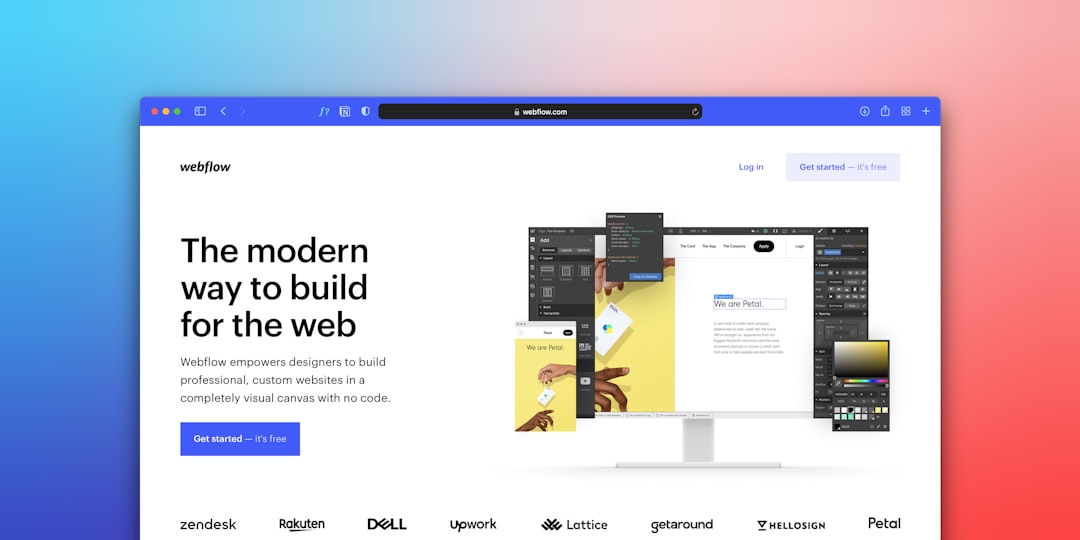
Webflow combines a visual drag-and-drop builder with the power of clean, production-ready HTML, CSS, and JavaScript — ideal for teams that want full design control without touching code.
Best For: SaaS founders who want a custom front-end experience with flexibility to scale.
Key Features:
- Custom layouts and animations
- CMS for dynamic content like blogs or documentation
- Responsive design tools
- Ecommerce and integration capabilities
Pros:
- Highly flexible and pixel-perfect design options
- Clean codebase and SEO-friendly
- Supports memberships and gated content
Cons:
- Steeper learning curve for beginners
- Higher pricing at scaling stages
2. Carrd
Carrd is known for its simplicity and speed. It’s perfect for single-page launches — ideal for collecting email signups, marketing campaigns, or validating a SaaS idea through a landing page before development.
Best For: Fast landing pages, email collection, and waitlists.
Key Features:
- One-page site builder
- Form integrations with Mailchimp, ConvertKit, Zapier
- Responsive design templates
- Extremely lightweight pages
Pros:
- Affordable, starting at $19/year for Pro
- Blazing fast to launch
- Ideal for quick A/B testing of headlines
Cons:
- Limited for multi-page or large MVPs
- No native CMS or database features
3. Softr
Softr empowers founders to turn Airtable (or Google Sheets) into robust web apps with database logic — making it perfect for SaaS MVPs involving dashboards, user-generated content, or portals.
Best For: Internal tools, portals, or MVPs that need gate-controlled data access.
Key Features:
- Drag-and-drop builder connected to Airtable or Google Sheets
- Authentication and user permissions
- Out-of-the-box templates for directories, CRMs, and dashboards
Pros:
- No-code logic and dynamic data access
- User access controls for gated content
- Good for member-based MVPs like SaaS dashboards
Cons:
- Restricted design customization
- Limited to Airtable or spreadsheet databases
4. Bubble
Bubble allows for full app logic and database management — designed for more complex SaaS MVPs. With Bubble, founders can build actual web apps that go beyond static pages and simple integrations.
Best For: SaaS products needing authentication, APIs, user roles, or complex workflows.
Key Features:
- Full visual programming system
- Database and backend logic handling
- API integration and front-end customization
Pros:
- True app builder with dynamic elements
- Community templates and plugin options
- Capable of launching full SaaS MVPs with payments and user auth
Cons:
- Slower learning curve than others on this list
- Performance issues if not optimized
5. Typedream
Typedream is a newer tool geared toward founders who want Notion-like editing simplicity with a clean, modern frontend. It’s ideal for static MVP sites, dashboards, or content-driven projects.
Best For: Quick content-based MVPs or documentation sites integrated with tools like Notion or Airtable.
Key Features:
- Notion-style content editing
- Blocks for buttons, embeds, cards, and tables
- Google Analytics and SEO integration
Pros:
- Extremely intuitive UX
- Great visual consistency
- Perfect fit for early product pages or documentation
Cons:
- Not suitable for apps with complex logic
- Limited plugin ecosystem
How to Choose the Right Builder for Your MVP
Each tool serves different types of MVP strategies. Here’s how to decide:
- Need a fast landing page? Go with Carrd or Typedream.
- Want custom design freedom? Choose Webflow.
- Need dashboards or user logins? Go for Softr or Bubble.
- Want backend logic and workflows? Bubble is top-tier for full web app MVPs.
Integrations and Automation
Modern MVPs often succeed because of seamless third-party integrations. Tools like Zapier, Integromat (now called Make), and native platforms like Airtable, Stripe, and Slack can help your MVP feel like a finished product — even when much of it is stitched together under the hood.
Image not found in postmetaMost website builders now offer API connectors, webhook support, and no-code database connections. These extend functionality without major development overhead.
Final Thoughts
SaaS founders benefit greatly from the speed of execution and reduced development costs offered by modern website builders. By choosing the right tool for your MVP’s needs — whether that’s a simple landing page or a full web app — you can validate faster and reach product-market fit with fewer resources.
These platforms are not just suitable for prototyping; many SaaS companies continue building on them well into growth stages. As no-code and low-code ecosystems become the norm, website builders should be a central part of your SaaS toolkit.