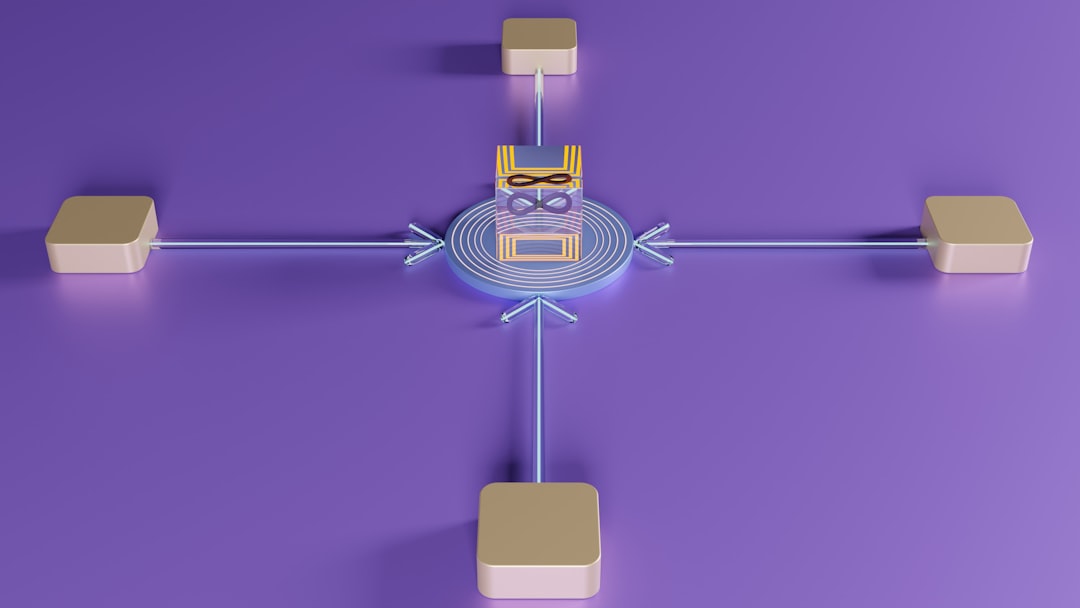
As organizations race to embed artificial intelligence into everyday workflows, a new challenge has emerged: how to orchestrate dozens—or even hundreds—of AI agents working simultaneously. It’s no longer enough to deploy a single chatbot or automation script. Modern enterprises are building ecosystems of specialized agents that handle research, customer service, analytics, software development, operations, and decision support. Coordinating them efficiently requires more than ad hoc integrations—it requires multi-agent coordination platforms.
TLDR: Multi-agent coordination platforms enable businesses to orchestrate multiple AI agents that collaborate on complex tasks. These systems manage communication, workflows, memory, retries, permissions, and scalability. By centralizing oversight and governance, they reduce chaos and improve reliability. Companies adopting these platforms can scale AI automation from isolated experiments to enterprise-grade operations.
In this article, we explore what multi-agent coordination platforms are, why they matter, how they work, and which solutions are leading the charge.
The Rise of Multi-Agent Systems
Early AI deployments often looked like this: a single large language model (LLM) connected to a user interface. Today, architecture is rapidly evolving toward multi-agent systems, where specialized agents collaborate to complete complex objectives. For example:
- A research agent gathers market data.
- An analysis agent processes trends.
- A writing agent drafts a report.
- A compliance agent checks regulatory risk.
- A supervisor agent validates quality before delivery.
Each agent focuses on a narrow task but works in coordination toward a shared goal. This model improves accuracy, modularity, and resilience. However, coordinating multiple autonomous or semi-autonomous agents introduces significant technical and operational complexity.
Without orchestration, teams face:
- Conflicting outputs
- Redundant processing
- Data silos
- Security vulnerabilities
- Uncontrolled API costs
This is where dedicated coordination platforms come in.
What Is a Multi-Agent Coordination Platform?
A multi-agent coordination platform is a system that manages the communication, task allocation, monitoring, and governance of multiple AI agents operating together. Think of it as a mission control center for AI automation.
Core responsibilities typically include:
- Task decomposition: Breaking complex goals into smaller subtasks.
- Agent routing: Assigning tasks to the appropriate agent.
- Memory management: Storing shared context across workflows.
- State tracking: Monitoring task progress in real time.
- Error handling and retries: Preventing cascade failures.
- Security policies: Managing permissions and data access.
- Observability: Logging and analytics for performance tuning.
Instead of agents improvising connections, the platform standardizes interactions through rules, APIs, and structured protocols.
Why Scaling AI Automation Requires Coordination
When small teams experiment with AI, coordination often happens manually. A human supervises outputs, resolves conflicts, and passes context between tools. However, enterprise-level automation demands:
- High availability
- Auditability
- Compliance
- Cost predictability
- Deterministic workflows
For instance, an e-commerce company might automate:
- Inventory monitoring
- Dynamic pricing adjustments
- Personalized marketing emails
- Fraud detection reviews
- Customer support escalation
Each workflow may involve 5–15 agents interacting asynchronously. Without orchestration, scaling such systems becomes chaotic and risky.
Coordination platforms reduce entropy. They introduce structure, traceability, and rule enforcement—allowing organizations to scale beyond pilot projects.
Architectural Elements of Effective Platforms
Not all coordination platforms are created equal. The most robust solutions share several architectural components:
1. Centralized Orchestration Layer
This layer defines workflows, dependencies, and agent hierarchies. It often uses declarative configurations to describe how tasks flow between agents.
2. Shared Memory or Vector Store
Agents require shared context to collaborate effectively. Platforms integrate databases or vector stores to enable persistent knowledge retention.
3. Communication Protocol
Agents communicate via structured formats (JSON schemas, task contracts, or event streams). Standardization prevents misinterpretation.
4. Monitoring Dashboard
Real-time observability enables administrators to track performance, view logs, and intervene when necessary.
5. Governance Controls
Permission systems, audit logs, and compliance integrations ensure enterprise readiness.

Leading Multi-Agent Coordination Platforms
Several frameworks and enterprise solutions are shaping this space. Below is a comparison of prominent options:
| Platform | Best For | Strengths | Limitations |
|---|---|---|---|
| LangGraph | Structured multi-agent workflows | Graph-based orchestration, durable execution | Requires engineering setup |
| AutoGen | Conversational agent collaboration | Flexible multi-agent dialogue framework | Less opinionated governance tools |
| CrewAI | Role-based agent teamwork | Clear agent role structures, easy prototyping | Enterprise scaling still evolving |
| Semantic Kernel | Enterprise AI integration | Memory connectors, plugin ecosystem | Complex for smaller teams |
| Enterprise AI Orchestration Suites | Large-scale deployments | Security, compliance, monitoring | Higher cost |
Choosing the right platform depends on organizational maturity, technical expertise, and compliance requirements.
Real-World Applications
Let’s explore practical examples where multi-agent coordination unlocks scalable automation:
Automated Research and Reporting
A consulting firm deploys agents for:
- Data scraping
- Statistical modeling
- Competitive intelligence
- Slide creation
The coordination platform ensures outputs move sequentially and meet quality gates before client delivery.
AI-Powered DevOps
In software engineering environments:
- One agent reviews pull requests.
- Another generates test cases.
- A third monitors performance metrics.
- A supervisor agent flags high-risk deployments.
This significantly reduces human bottlenecks while preserving oversight.
Customer Experience Automation
Retail brands orchestrate agents that:
- Analyze sentiment in customer queries
- Generate responses
- Escalate complex tickets
- Update CRM systems automatically
Coordination ensures consistent brand voice and prevents contradictory actions.

Benefits of Multi-Agent Coordination Platforms
The value proposition extends beyond automation. Key advantages include:
- Modularity: Replace or upgrade individual agents without disrupting the system.
- Resilience: Failures in one agent don’t collapse the entire workflow.
- Cost Efficiency: Smarter task routing minimizes unnecessary token or API usage.
- Faster Innovation: Teams experiment safely within controlled environments.
- Governance Readiness: Audit trails simplify compliance reporting.
Organizations moving from isolated AI apps to orchestrated agent ecosystems often see improved consistency and reduced operational friction.
Challenges to Consider
Despite their advantages, coordination platforms introduce their own complexities:
- Overengineering Risk: Small teams may adopt unnecessary complexity.
- Agent Drift: Models updates may affect interaction patterns.
- Security Concerns: Cross-agent data flows require rigorous oversight.
- Observability Overload: Large systems can produce overwhelming logs.
Successful implementation requires architectural discipline and phased rollout strategies.
Best Practices for Scaling Effectively
To maximize ROI, organizations should follow several guiding principles:
- Start with Defined Objectives: Identify high-impact workflows before expanding horizontally.
- Design Clear Agent Roles: Avoid overlapping responsibilities.
- Implement Guardrails Early: Governance and monitoring should not be an afterthought.
- Measure Performance Continuously: Track latency, cost per task, and outcome accuracy.
- Build Human-in-the-Loop Controls: Maintain escalation points for critical decisions.
Gradual scaling prevents technical debt and workflow fragility.
The Future of AI Coordination
We are witnessing the early stages of distributed AI ecosystems. In the near future, coordination platforms may incorporate:
- Self-healing workflows
- Predictive load balancing
- Cross-organization agent collaboration
- Autonomous goal refinement
As models become more capable, the bottleneck shifts from intelligence to organization. The true competitive advantage lies not just in having powerful agents—but in orchestrating them effectively.
Conclusion
AI automation is evolving from isolated tools to interconnected agent networks. Multi-agent coordination platforms act as the backbone of this transformation, bringing structure, governance, and scalability to increasingly complex systems.
For organizations aiming to move beyond experimentation and into enterprise-wide automation, coordination is no longer optional—it’s foundational. By investing in platforms that manage collaboration between agents, businesses can unlock higher efficiency, stronger compliance, and sustainable AI growth.
In the end, scaling AI isn’t just about smarter models. It’s about smarter orchestration.