Factories, utilities, logistics networks, and energy facilities are becoming increasingly connected, generating vast amounts of operational data from machines, sensors, robots, vehicles, and control systems. An Industrial IoT platform turns that data into useful intelligence by collecting it, processing it, securing it, and delivering insights to operators, engineers, and business leaders. Choosing the right platform is not simply a technology decision; it affects production uptime, asset performance, compliance, cybersecurity, and long-term digital transformation strategy.
TLDR: The best Industrial IoT platform depends on your organization’s size, industry, technical maturity, and security requirements. Leading platforms differ in device connectivity, edge computing, analytics, scalability, integration options, and industrial cybersecurity features. Cloud-native platforms are strong for scale and analytics, while industrial-native platforms often excel in protocol support, reliability, and operational technology integration. A successful choice should balance features, scalability, security, cost, and ease of deployment.
What Is an Industrial IoT Platform?
An Industrial Internet of Things platform, often called an IIoT platform, is a software environment designed to connect industrial equipment and systems to digital applications. It can collect data from programmable logic controllers, sensors, supervisory control and data acquisition systems, manufacturing execution systems, enterprise resource planning tools, and cloud databases.
Unlike consumer IoT platforms, IIoT platforms must operate in environments where downtime is expensive, safety is critical, and equipment may remain in service for decades. They need to support legacy protocols, harsh operating conditions, strict access control, and real-time or near-real-time decision-making.
Common IIoT use cases include:
- Predictive maintenance for machines, motors, pumps, turbines, and conveyors
- Remote monitoring of distributed industrial assets
- Energy optimization across facilities and production lines
- Quality control using sensor data and machine vision
- Digital twins for simulation, diagnostics, and performance modeling
- Production visibility through dashboards and real-time alerts
- Supply chain and logistics tracking for high-value assets

Key Features to Compare
When comparing Industrial IoT platforms, feature lists can look similar at first glance. Most vendors promise connectivity, dashboards, analytics, and security. The real differences appear when you examine how well those capabilities work in industrial conditions.
1. Device and Protocol Connectivity
Connectivity is the foundation of any IIoT deployment. A strong platform should support modern and legacy industrial protocols such as OPC UA, Modbus, MQTT, EtherNet/IP, PROFIBUS, PROFINET, CAN bus, and REST APIs. In many facilities, the most valuable equipment is not new. It may be 15 or 20 years old and still essential to production.
An effective platform should make it possible to connect old and new assets without excessive custom development. Some platforms provide built-in industrial gateways, while others rely on partner hardware or third-party connectors. For large manufacturing environments, protocol depth is often more important than a polished user interface.
2. Edge Computing
Industrial environments frequently require local data processing. Sending every sensor reading to the cloud can be costly, slow, or impractical. Edge computing allows data to be filtered, analyzed, and acted on near the machine or facility.
Edge capabilities are especially important for:
- Low-latency control and alerting
- Unreliable network environments
- Remote sites such as mines, wind farms, ships, and oil fields
- Reducing cloud storage and bandwidth costs
- Maintaining operations when cloud connectivity is interrupted
Some platforms offer lightweight edge runtimes that can run on industrial PCs, gateways, or even embedded devices. Others provide more advanced edge orchestration, allowing organizations to deploy models, rules, and updates across hundreds or thousands of sites.
3. Data Management and Contextualization
Raw sensor data has limited value until it is organized and contextualized. A temperature reading, for example, becomes useful only when you know which machine produced it, what process was running, which product batch was involved, and whether the reading is outside normal limits.
Leading IIoT platforms provide tools for data modeling, asset hierarchy, metadata management, and time-series storage. Some include industrial data historians or integrate with existing historians. Others use cloud databases optimized for large-scale telemetry.
The strongest platforms help transform machine data into business-ready information. This is critical for connecting operational technology teams with IT, analytics, finance, sustainability, and executive leadership.
4. Analytics, AI, and Machine Learning
Analytics is one of the main reasons companies invest in IIoT. Basic platforms provide dashboards and alerts. More advanced platforms offer anomaly detection, predictive maintenance models, process optimization, and AI-assisted diagnostics.
However, not every organization needs complex AI immediately. A platform with flexible analytics maturity is often better than one that forces users into advanced workflows too early. Look for capabilities such as:
- Real-time dashboards
- Custom alert rules
- Historical trend analysis
- Automated reporting
- Predictive maintenance templates
- Integration with data science tools
- Support for digital twin models
The most valuable analytics are not always the most sophisticated. In many facilities, simply identifying recurring downtime patterns or abnormal energy consumption can produce significant savings.
Comparing Common Platform Categories
Industrial IoT platforms can be grouped into several broad categories. Each category has strengths and trade-offs.
Cloud-Native IIoT Platforms
Cloud-native platforms are built on large-scale cloud infrastructure. They typically offer excellent scalability, flexible storage, advanced analytics, AI services, and global deployment options. Examples include platforms built around major cloud ecosystems and industrial cloud services.
Strengths:
- Massive scalability for global fleets and multi-site operations
- Strong integration with analytics, AI, and business intelligence tools
- Fast deployment of dashboards, applications, and APIs
- Flexible pricing models based on usage
Limitations:
- May require additional work for deep industrial protocol support
- Cloud costs can grow if data volumes are not controlled
- Connectivity interruptions can affect cloud-dependent applications
- Operational technology teams may need training to manage cloud workflows
Industrial-Native Platforms
Industrial-native platforms are often developed by automation, engineering, or manufacturing technology companies. They usually provide strong support for plant-floor systems, industrial protocols, asset models, and operational workflows.
Strengths:
- Excellent fit for manufacturing and process industries
- Strong compatibility with automation systems and industrial equipment
- Reliable edge and on-premises functionality
- Better alignment with plant maintenance and engineering teams
Limitations:
- May be less flexible for enterprise-wide cloud analytics
- Can involve higher licensing or integration costs
- Vendor ecosystems may be more closed
- Scaling across many regions may require careful planning
Open Source and Hybrid Platforms
Some organizations use open source frameworks, custom-built middleware, or hybrid architectures that combine edge software, cloud services, and specialized industrial applications. This approach can deliver high flexibility, especially for companies with strong internal engineering teams.
Strengths:
- Greater customization and control
- Reduced dependence on a single vendor
- Ability to combine best-of-breed components
- Potential cost advantages at smaller scale
Limitations:
- Requires skilled developers, architects, and cybersecurity specialists
- Support and maintenance responsibilities shift to the organization
- Integration complexity can increase over time
- Governance may become difficult without strong standards
Scalability: From Pilot Project to Enterprise Deployment
Many IIoT initiatives begin as pilot projects. A company may connect one production line, one compressed air system, or one group of machines. The real test comes later: can the platform scale from 20 devices to 20,000 without becoming unmanageable?
Scalability should be evaluated across several dimensions:
- Device scalability: How many connected assets can the platform support?
- Data scalability: Can it handle high-frequency telemetry and long-term historical data?
- Site scalability: Can it support multiple plants, regions, and business units?
- User scalability: Can access be managed for operators, engineers, executives, partners, and contractors?
- Application scalability: Can new use cases be added without rebuilding the architecture?
A scalable platform should also support automated provisioning, device lifecycle management, centralized policy enforcement, and standardized templates. Without these capabilities, every new site becomes a custom project, slowing adoption and increasing cost.
It is also important to consider data architecture. High-resolution industrial data can grow rapidly. If vibration sensors, quality systems, and machine controllers all stream continuous data to the cloud, storage and processing costs may surprise the business. Edge filtering, compression, event-based transmission, and tiered storage are essential for sustainable scale.
Security: The Most Critical Comparison Point
Industrial IoT security is not optional. Connecting machines to networks increases the potential attack surface, and industrial systems can affect physical processes. A cybersecurity incident in an office network is serious; a cybersecurity incident in a refinery, power plant, hospital, or production facility can be dangerous.
Strong IIoT platforms should include:
- Device identity management using certificates, keys, or secure hardware modules
- Encrypted communication for data in transit and at rest
- Role-based access control for users and applications
- Network segmentation support between IT and operational technology environments
- Secure firmware and software update mechanisms
- Audit logging for configuration changes and user activity
- Integration with security operations tools
- Compliance support for standards such as IEC 62443, ISO 27001, NIST, and industry-specific regulations
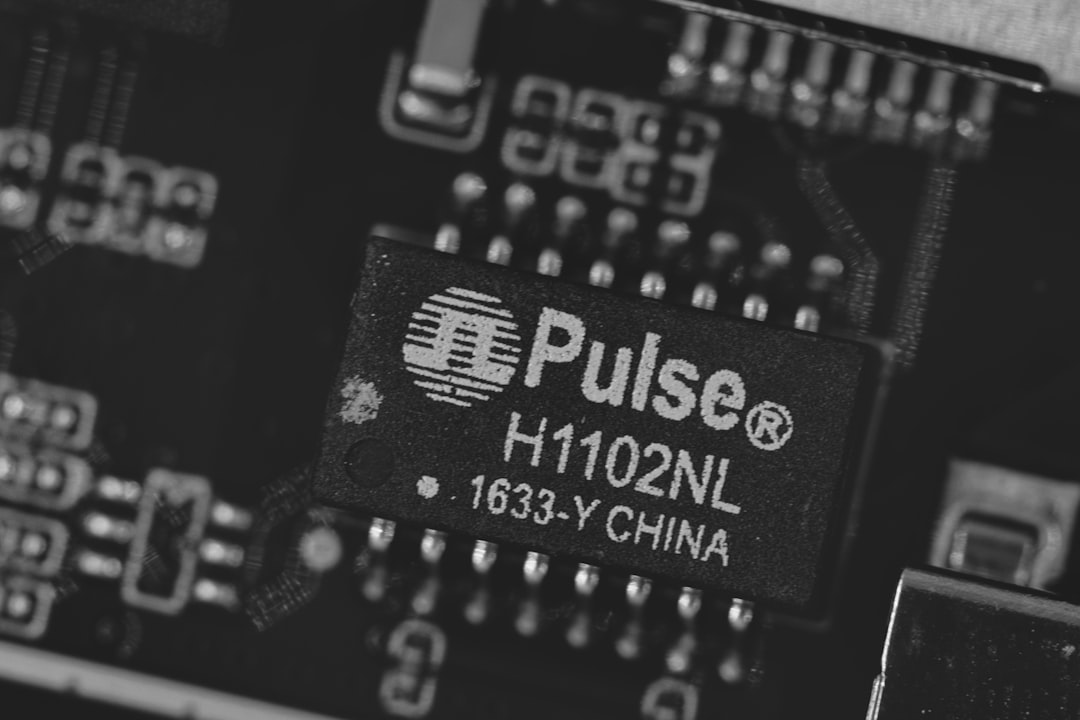
Security should be considered from the beginning, not added after deployment. Organizations should ask vendors how they handle vulnerability disclosure, patch management, penetration testing, tenant isolation, and incident response. They should also evaluate whether the platform supports zero trust principles, least-privilege access, and secure remote maintenance.
Another important question is who owns and controls the data. Industrial data may include production volumes, proprietary formulas, equipment performance, and customer-related information. Data residency, retention, exportability, and deletion policies should be clearly understood before signing a contract.
Integration with Existing Systems
No IIoT platform exists in isolation. It must connect with the systems a company already uses. These may include enterprise resource planning, computerized maintenance management, quality management, laboratory information management, supply chain planning, and business intelligence platforms.
Integration quality can determine whether an IIoT project remains a technical experiment or becomes a valuable business system. For example, predictive maintenance insights are more useful when they automatically create work orders in a maintenance platform. Energy analytics are more powerful when connected to cost accounting and sustainability reporting.
When comparing platforms, look for open APIs, prebuilt connectors, event streaming support, data export options, and compatibility with enterprise identity systems. Avoid architectures that trap data in isolated dashboards with limited ways to reuse it.
Cost Considerations
IIoT platform pricing can be complex. Vendors may charge by device, data volume, number of users, applications, cloud resources, edge gateways, or premium analytics modules. Implementation, integration, training, support, and cybersecurity assessments can add significant cost beyond the subscription fee.
A practical cost comparison should include:
- Initial licensing or subscription fees
- Hardware gateways and edge devices
- Cloud storage and compute expenses
- Integration and customization work
- Ongoing support and maintenance
- Cybersecurity monitoring and compliance costs
- Training for operators, engineers, and administrators
The cheapest platform is not always the most economical. A low-cost tool that requires heavy customization or creates unreliable operations can become expensive quickly. The better measure is total cost of ownership compared with measurable business outcomes such as reduced downtime, lower maintenance costs, improved throughput, and energy savings.
How to Choose the Right Platform
The best selection process begins with clear business goals. Instead of asking, “Which platform has the most features?” ask, “Which platform helps us solve our most important operational problems?”
Use the following checklist:
- Define priority use cases. Start with measurable goals such as reducing unplanned downtime or improving energy efficiency.
- Map existing assets and systems. Identify machines, protocols, data sources, and integration requirements.
- Evaluate edge and cloud needs. Decide which processing must happen locally and which can happen centrally.
- Test scalability early. Do not judge a platform only by a small pilot.
- Review security architecture. Include IT, operational technology, compliance, and risk teams.
- Check vendor ecosystem and support. Consider partners, documentation, training, and long-term roadmap.
- Calculate total cost of ownership. Include deployment, scaling, operations, and future expansion.
Final Thoughts
Industrial IoT platforms are becoming central to modern operations, but no single platform is the perfect choice for every organization. Cloud-native platforms often provide outstanding scalability and advanced analytics. Industrial-native platforms usually offer deep operational technology integration and reliability. Hybrid and open approaches provide flexibility but require stronger internal expertise.
The winning platform is the one that fits your operational reality while supporting future growth. It should connect diverse assets, scale across facilities, protect critical systems, and turn industrial data into practical decisions. When features, scalability, and security are evaluated together, an IIoT platform becomes more than a technology layer; it becomes a foundation for safer, smarter, and more resilient industrial performance.