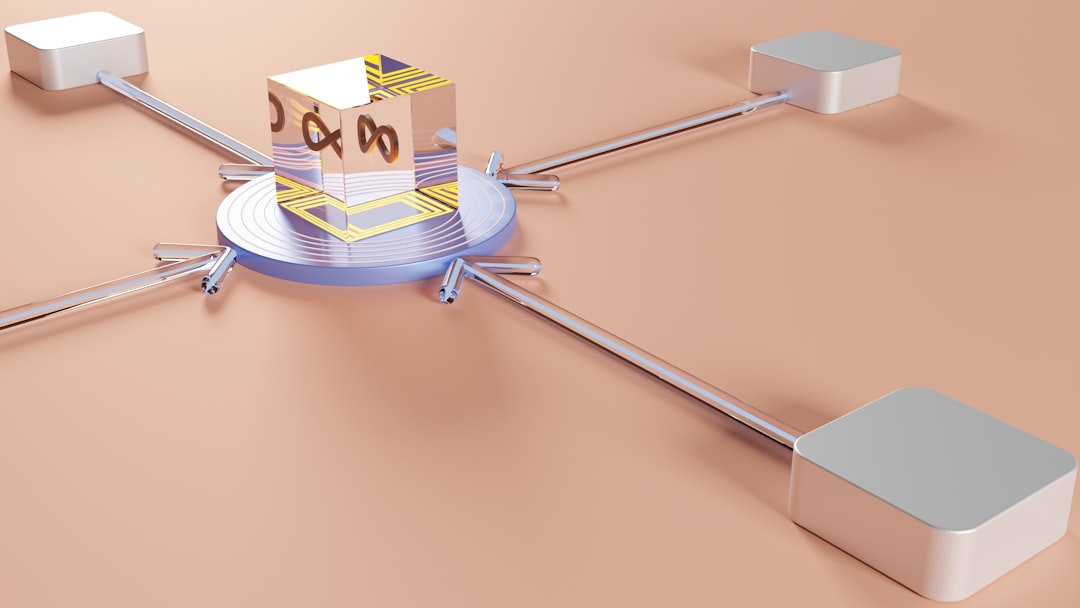
As organizations scale their digital products, the complexity of their backend systems grows exponentially. Microservices proliferate, teams expand, and APIs multiply—often leading to fractured architectures that are difficult to manage, evolve, and scale. GraphQL Federation software has emerged as a powerful solution to this complexity, enabling companies to unify distributed services into a single, scalable API layer while preserving team autonomy and performance.
TLDR: GraphQL Federation allows multiple teams to build and maintain separate GraphQL services that combine into a single unified API. It enables scalable API architectures without central bottlenecks, supports independent service ownership, and improves developer experience. By structuring services around domains and stitching them into a cohesive schema, organizations gain both flexibility and performance. Federation is especially powerful for fast-growing companies managing microservices at scale.
The Challenge of API Scalability
Modern applications rarely rely on a single monolithic backend. Instead, they’re composed of:
- Microservices handling specific domains (users, billing, inventory, analytics)
- Third-party APIs for specialized functionality
- Legacy systems that must remain operational
While this distributed model improves flexibility, it introduces a new challenge: how do you provide clients with a unified, consistent API without creating a central bottleneck?
Traditional approaches such as API gateways or schema stitching often require heavy coordination and centralized ownership. As more teams contribute to the API, the system becomes harder to maintain, slowing innovation and deployment cycles.
This is where GraphQL Federation software changes the game.
What Is GraphQL Federation?
GraphQL Federation is an architectural approach that enables multiple independent GraphQL services—called subgraphs—to compose into a single unified supergraph. Each team owns its subgraph, while a federation gateway composes them into one cohesive API exposed to clients.
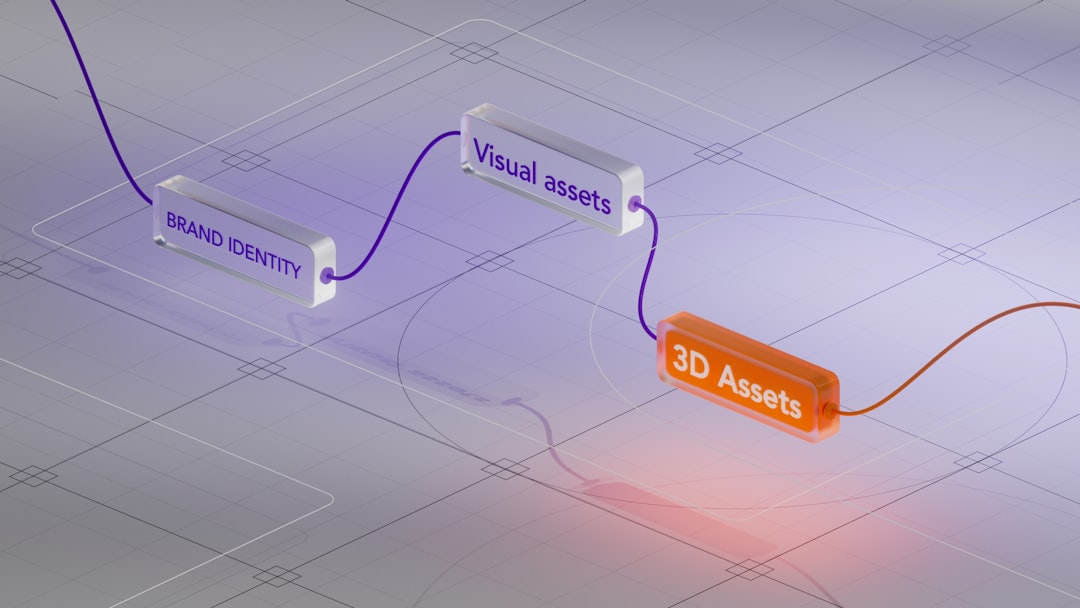
Instead of merging all resolvers and types into one massive schema managed by a central team, federation allows services to:
- Define and expose their own schema extensions
- Share entity references across domains
- Resolve data collaboratively at runtime
The result is a distributed yet unified graph that scales organizationally and technically.
Core Components of Federation Software
GraphQL Federation software typically includes several key components:
1. Subgraphs
Each microservice exposes a GraphQL schema describing the data and functionality it owns. Subgraphs are independently deployable and maintainable.
2. Supergraph Schema
The federation layer composes individual subgraph schemas into one unified schema known as the supergraph.
3. Gateway or Router
The gateway acts as the entry point for client requests. It analyzes queries, determines which services are responsible for various fields, and orchestrates data fetching efficiently.
4. Composition Engine
This tool validates compatibility between subgraphs and merges them safely into a single schema.
Together, these components enable horizontal scaling without sacrificing clarity or control.
Why Federation Improves API Scalability
Scalability involves more than handling traffic. It includes team scalability, deployment scalability, and evolutionary scalability. Federation addresses each dimension.
1. Team Autonomy
Instead of a single API team managing every schema change, domain teams own their sections of the graph. For example:
- The Accounts Team owns user identity types.
- The Orders Team owns transaction history.
- The Inventory Team owns product availability.
Each team can iterate independently without waiting for centralized approvals, dramatically accelerating development velocity.
2. Horizontal Performance Scaling
Since each subgraph operates as an independent service, it can scale based on its own load patterns. High-traffic services can allocate more resources without impacting other services.
3. Schema Modularity
Federation enforces domain-driven design principles, which naturally structure schemas around business entities. This modular design reduces coupling and improves maintainability.
4. Efficient Query Planning
Modern federation gateways optimize network calls by generating an execution plan for incoming queries. They minimize over-fetching and duplicate requests, reducing latency.
Federation vs. Schema Stitching
Before federation, many organizations relied on schema stitching to merge multiple GraphQL APIs. While useful, stitching suffered from several limitations:
- Tight coupling between services
- Manual resolver configuration
- Difficult version management
- Centralized maintenance overhead
Federation improves on this by enabling declarative entity sharing. Subgraphs define how types connect using standardized directives, removing much of the manual complexity.
This architectural shift makes federation better suited for enterprise-scale environments.
How Federation Handles Entity Sharing
A key innovation in GraphQL Federation is the concept of entities. Multiple services can contribute fields to the same type without tightly coupling their schemas.
For example:
- The User service defines a User type with basic identity fields.
- The Reviews service extends the User type with review statistics.
- The Orders service adds purchase history connections.

From the client’s perspective, it’s a single seamless type. Behind the scenes, the gateway coordinates resolution across services.
This entity-based model enables natural domain expansion without rewriting existing services.
Key Benefits for Growing Organizations
GraphQL Federation software particularly shines in high-growth environments. Here’s why:
Improved Developer Experience
- Single endpoint for clients
- Self-documenting schema
- Clear service ownership boundaries
Accelerated Feature Development
- Independent deployments
- Parallel team progress
- Reduced cross-team dependencies
Operational Resilience
- Fault isolation at the subgraph level
- Independent scaling policies
- Clear observability patterns
Future-Proof Architecture
- Supports evolving microservice ecosystems
- Adapts to new domains easily
- Encourages incremental modernization
By structuring APIs according to real business domains, companies ensure that technical architecture mirrors organizational growth.
Operational Considerations
While powerful, federation introduces new operational responsibilities.
Schema Governance
Clear guidelines must define naming conventions, type ownership, and deprecation policies to prevent chaos.
Performance Monitoring
The gateway layer requires robust monitoring to detect latency spikes and inefficient query plans.
Version Coordination
Since multiple teams contribute to one unified schema, compatibility checks during composition are crucial.
Investing in tooling for schema validation, tracing, and observability ensures federation remains scalable rather than becoming distributed complexity.
Security in a Federated Graph
API scalability must never compromise security. Federation software typically supports:
- Centralized authentication at the gateway level
- Field-level authorization within subgraphs
- Query depth limiting to prevent abuse
- Rate limiting for traffic control
This layered security model ensures that even as services scale independently, security remains consistent across the graph.
When to Adopt GraphQL Federation
Not every organization needs federation immediately. It becomes most valuable when:
- Multiple teams own separate microservices
- API schema coordination is slowing releases
- Client teams demand a unified data graph
- The organization is transitioning from monolith to microservices
For smaller teams with a single backend service, a standalone GraphQL server may be sufficient. Federation is best viewed as a scaling strategy rather than a default starting point.
The Strategic Advantage
API scalability is not just a technical concern; it’s a strategic capability. Organizations that scale APIs effectively can:
- Ship features faster
- Integrate acquisitions more smoothly
- Support diverse client applications efficiently
- Experiment without destabilizing core systems
GraphQL Federation software provides a structured yet flexible approach to distributing responsibility while preserving architectural coherence.
Looking Ahead
As cloud-native ecosystems evolve, composable architectures are becoming the norm. Federation aligns naturally with this movement, embracing distributed ownership while maintaining a seamless consumer experience.
With increasing emphasis on real-time data, edge computing, and AI-driven services, API layers must be more adaptable than ever. Federation’s modular design positions it as a foundational technology for the next generation of scalable platforms.
In a world where software systems are constantly expanding and reorganizing, GraphQL Federation stands out as a pragmatic and forward-thinking solution. By blending autonomy with unification, it allows organizations to grow without fragmenting their APIs—turning complexity into coordinated scalability.